- Overview
- ChromatiNet Pearl
- ChromatiNet Red
- ChromatiNet Grey
- Download Center
This technology promotes differential stimulation of desirable physiological responses, which determine the commercial value of each crop. This is an economical and environmentally friendly alternative to current labor-consuming methods (such as pruning and thinning) and intensive use of growth regulators and other chemicals.
ChromatiNet Pearl
ChromatiNet Red The net changes the light spectrum transmitted to the plants, reduces the spectrum of blue, green and yellow light and increases the red and far-red light spectrum. Thus, the rhythm of plants’ development under red light is increased, their leaf surface is larger, their stems are longer and thicker, and the total foliage volume is higher.
ChromatiNet Grey
|
|
ChromatiNet Paerl
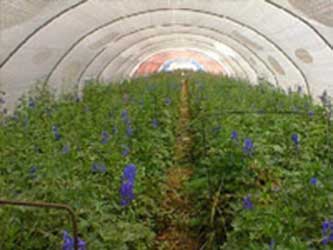
The direct light which passes through the threads is diffused and covers many parts of the plant, especially the lower stems and leaves. This results in increased photosynthesis efficiency, leading to accelerated and abundant growth and improved product quality. The diffused light increases the number of secondary branches in many plants and is especially beneficial in stem and leaf products, such as herbs, leaf vegetables and nursery crops.
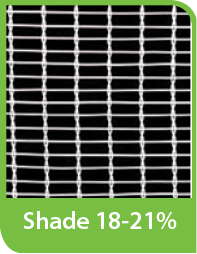
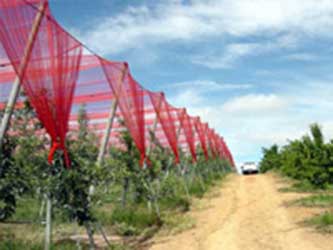
Pearl Leno Net 20% for hail protection and light spectrum management
The net is especially suitable for protection against damage from hail, sunstroke, birds, bats and wind in orchards and vineyards.. Flexible, light, strong and easy to spread, and can be placed on trees with a simple support. The net is recyclable. ![]()
ChromatiNet Pearl Shade Net 30%
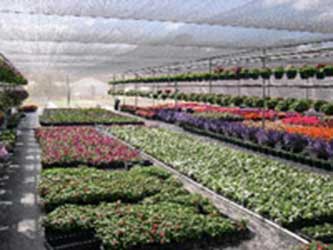
![]() ![]() Direct light passes through the threads is diffused and covers many parts of the plant, especially the lower stems and leaves. This results in increased photosynthesis efficiency, leading to accelerated and abundant growth and improved product quality. The diffused light increases the number of secondary branches in many plants and is especially beneficial in stem and leaf products.
ChromatiNet Pearl Shade Net 40%
![]() ![]()
ChromatiNet Pearl is knitted from a sheet that is manufactured in a special process resulting in increased photosynthesis.
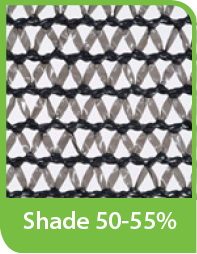
ChromatiNet Pearl Shade Net 50%
![]() ![]()
ChromatiNet Pearl is knitted from a sheet that is manufactured in a special process resulting in increased photosynthesis.
ChromatiNet Pearl Shade Net 60%
![]() ![]()
ChromatiNet Pearl is knitted from a sheet that is manufactured in a special process resulting in increased photosynthesis.
|
||||||||||||||||||||||||||||||||
|
ChromatiNet Red
ChromatiNet Red changes the light spectrum transmitted to the plants, reduces the spectrum of blue, green and yellow light and increases the red and far-red light spectrum. Thus, the rhythm of plants’ development under red light is increased, their leaf surface is larger, their stems are longer and thicker, and the total foliage volume is higher. The net enables to obtain early flowering without decreasing flower quality. The net is suitable mainly for growers who wish to accelerate growth and increase foliage volume plants such as house plants, decorative branches, non-flowering herbs, and a variety of field and nursery plants, especially when the objective is to enhance the development of root systems in shoots and tissue culture plantlets.
Red Leno Net 20% for hail protection
![]() ![]() Red Leno Net 20% is an innovative net that combines hail-protection together with light-spectrum management in greenhouses and shade houses. The net is woven with monofilament UV-stabilized threads. The net increases the red and far red spectrum that passes through it and creates a unique light composition to improve yields, accelerate growth, increase fruit size and bring forward fruit ripening.
ChromatiNet Red Combined Hail Protection Net 25%
![]() ![]() ChromatiNet Red Combined 25% is an innovative net that combines hail-protection together with light-spectrum management in greenhouses and shade houses. The high-quality, low-density net is woven from polyethylene (HDPE) yarn and monofilament UV-stabilized thread.
ChromatiNet Red Shade Net 30%
![]() ![]()
ChromatiNet Red reduces the spectrum of blue, green and yellow light and increases the red and far-red light spectrum. Thus, the rhythm of plants’ development under red light is increased, their leaf surface is larger, their stems are longer and thicker, and the total foliage volume is higher.
ChromatiNet Red Shade Net 40%
![]() ![]()
ChromatiNet Red reduces the spectrum of blue, green and yellow light and increases the red and far-red light spectrum. Thus, the rhythm of plants’ development under red light is increased, their leaf surface is larger, their stems are longer and thicker, and the total foliage volume is higher.
ChromatiNet Red Shade Net 50%
![]() ![]()
ChromatiNet Red reduces the spectrum of blue, green and yellow light and increases the red and far-red light spectrum. Thus, the rhythm of plants’ development under red light is increased, their leaf surface is larger, their stems are longer and thicker, and the total foliage volume is higher.
ChromatiNet Red Shade Net 60%
![]() ![]()
ChromatiNet Red reduces the spectrum of blue, green and yellow light and increases the red and far-red light spectrum. Thus, the rhythm of plants’ development under red light is increased, their leaf surface is larger, their stems are longer and thicker, and the total foliage volume is higher.
ChromatiNet Red Shade Net 70%
![]() ![]() ChromatiNet Red changes the light spectrum transmitted to the plants, reduces the spectrum of blue, green and yellow light and increases the red and far-red light spectrum. Thus, the rhythm of plants’ development under red light is increased, their leaf surface is larger, their stems are longer and thicker, and the total foliage volume is higher.
ChromatiNet Red reduces the spectrum of blue, green and yellow light and increases the red and far-red light spectrum. Thus, the rhythm of plants’ development under red light is increased, their leaf surface is larger, their stems are longer and thicker, and the total foliage volume is higher.
|
||||||||||||||||||||||||||||||||||||||||||||||
|
ChromatiNet Grey
Light distribution is caused by refraction of direct light radiation through the special crystalloid structure of the grey net filament. There is a difference between the crystalloid structure of the grey and black net filaments.
ChromatiNet Grey 30% - Shade Net
![]() ![]()
ChromatiNet Grey 40% - Shade Net
![]() ![]()
ChromatiNet Grey 50% - Shade Net
![]() ![]()
There is a difference between the crystalloid structure of the grey and black net filaments. Light distribution is caused by refraction of direct light radiation through the special crystalloid structure of the grey net filament.
ChromatiNet Grey 60% - Shade Net
![]() ![]()
There is a difference between the crystalloid structure of the geay and black net filaments. Light distribution is caused by refraction of direct light radiation through the special crystalloid structure of the grey net filament.
ChromatiNet Grey 70% - Shade Net
![]() ![]()
There is a difference between the crystalloid structure of the grey and black net filaments. Light distribution is caused by refraction of direct light radiation through the special crystalloid structure of the grey net filament.
ChromatiNet Grey 80% - Shade Net
![]() ![]()
There is a difference between the crystalloid structure of the grey and black net filaments. Light distribution is caused by refraction of direct light radiation through the special crystalloid structure of the grey net filament.
|
||||||||||||||||||||||||||||||||||||


ChromatiNet® is a series of colored shade nets with special optical properties which improve the utilization of solar radiation by agricultural crops. 


An innovative net that combines hail-protection together with light-spectrum management in greenhouses and shade houses. The net is woven with monofilament UV-stabilized threads.